
Is Slowing Down a Competitive Disadvantage?
Is Slowing Down a Competitive Disadvantage?
The short answer is no.
But that question deserves a more precise answer — because the version of slowing down most founders imagine is not what I am
talking about.
The couch potato slows down. More Netflix. More scrolling. More input with no output. The body gets heavier. The mind gets foggier. Motivation drops. This is not rest — it is stagnation. And stagnation depletes in its own quiet way.
What I am pointing to is something different.
The biology of genuine ease
When the body is truly resourced — Jing reserves adequate, adrenal output calibrated, mitochondria running on the oxidative pathway rather than the emergency sugar-burning model — something shifts that no productivity system can replicate.
You feel light.
Not the forced lightness of a motivational post. Not the performed ease of someone who has learned to smile through the pressure. Actual lightness. The kind that moves through a room differently. That thinks clearly without effort. That makes decisions from a place of clarity rather than threat-response.
This is not a personality type. It is a physiological state.
And it is not achieved by doing less. It is achieved by running the hardware correctly.
What pushing through actually costs
The ego reads depletion as a challenge to overcome. Push harder.
More discipline. More hours. If you are not gaining ground, it must be effort that is missing.
This is the most expensive misreading a founder can make.
When the nervous system is chronically locked in sympathetic activation — cortisol elevated, DHEA-S dropping, mitochondria shifted to glucose dependency because the oxidative pathway has become too costly to run — the body is not performing. It is surviving.
Every decision made from that state carries the cost of a compromised system. Thinking is narrower. Emotional responses are faster and less accurate. The body moves through the world in a kind of permanent bracing.
The founder believes they are pushing through difficulty. The biology shows they are spending reserves they are not replenishing.
The nervous system that can move freely
A regulated nervous system is not a passive, calm nervous system. It is a system that can move — freely, quickly, appropriately — between states.
Sympathetic when the moment requires full engagement.
Parasympathetic when the moment requires repair, digestion, integration.
The founder who can do both is not slower. They are more accurate. Their energy is available when it is needed rather than constantly leaking into background threat-response.
This is what inner structure means. Not rigidity. Not control. A kind of internal coherence that allows life to arrive — the good and the difficult — and be met without the system immediately going into bracing mode.
When something arrives, it lands. It is felt. It settles. And then a response emerges that is not simply the fastest available pattern from the reptile brain. It is something more considered, more whole, more genuinely yours.
Lightness is not the absence of power
In Dzogchen practice there is a quality sometimes described as the natural state — effortless, clear, without the weight of constant self-management. In Chinese Medicine, when Jing is full and Yang moves from a rooted place, the body carries a quality of ease that is not laziness. It is the ease of something working as it was designed to work.
A hawk does not strain to see clearly. Clear vision is what it is.
The regulated founder does not force focus. Focus is what becomes available when the hardware is running correctly.
Slowing down — genuine slowing down, not stagnation — is what fills the reserve that makes all of this possible. It is not a competitive disadvantage. It is the condition for sustainable competitive advantage.
The question is not whether you can afford to slow down.
It is whether you can afford not to.
So how do you actually get there?
Not by doing less. By doing differently.
Here are 8 entry points:
1. The 25/5 rule — non-negotiable Your prefrontal cortex cannot sustain focused output beyond 25 minutes without degrading. After that you are not working — you are burning glucose on a stalling engine. 25 minutes on. 5 minutes completely off. Not checking the phone. Off.
2. Box breathing before every major decision Four counts in. Hold four. Four out. Hold four. One round before any high-stakes conversation or commitment. This is not relaxation. It shifts the CO2 balance, activates the vagal brake, and moves the decision out of threat-response and into clear assessment. 90 seconds. Every time.
3. Morning sunlight — first 15 minutes outside Not through glass. Outside. Sunlight into the eyes in the first hour sets the cortisol awakening response correctly, anchors the circadian rhythm, and begins the melatonin countdown for that night's sleep. This single habit touches more biological systems than most supplements.
4. Cold exposure A 3-minute cold shower increases dopamine significantly — sustained, not spiked. It trains the nervous system to move through discomfort without bracing. Over time it builds the same capacity you need in high-stakes environments. Composure is a hardware skill.
5. Gratitude — last thing before sleep Not as a spiritual practice. As a neurological one. Writing 3 specific things — not generic, specific — shifts the brain's threat-detection default before sleep. The nervous system consolidates what it rehearsed last. Give it something worth consolidating.
6. Protect sleep architecture Deep sleep is when growth hormone releases, cellular repair runs, and cortisol resets. Founders treat sleep as the variable. It is the non-negotiable. Target more than 20% deep sleep. No screens after 9pm. Room cold and dark. This is not recovery — it is system restore.
7. The 80/20 of your energy 20% of your commitments are producing 80% of your meaningful output. The rest is noise that costs nervous system bandwidth you are not accounting for. Audit your week. What would you eliminate if you knew it was depleting the reserve that makes the 20% possible?
8. Invest in yourself — starting with the data Reading, movement, learning — yes. But the highest leverage investment a founder can make is knowing the actual state of their hardware. Motivation, willpower, and discipline are downstream of biology. When the hardware is running correctly, none of this requires force.
9. Learn Qigong and meditation — fill the reserve, not just protect it The 8 points above largely protect what you have. Qigong and sitting practice do something different — they actively rebuild the Jing reserve that chronic performance has been drawing from. Not as exercise. Not as stress relief. As a direct conversation with the deeper hardware. This is where the lightness, the ease, the inner power that cannot be faked begins to come from. Not from managing yourself better. From filling what was empty.
The Sovereign Blood Audit maps exactly where your system sits — and what becomes available when it is no longer running on debt.
Until next week. Mathias Physiology Architect — Vital Ease
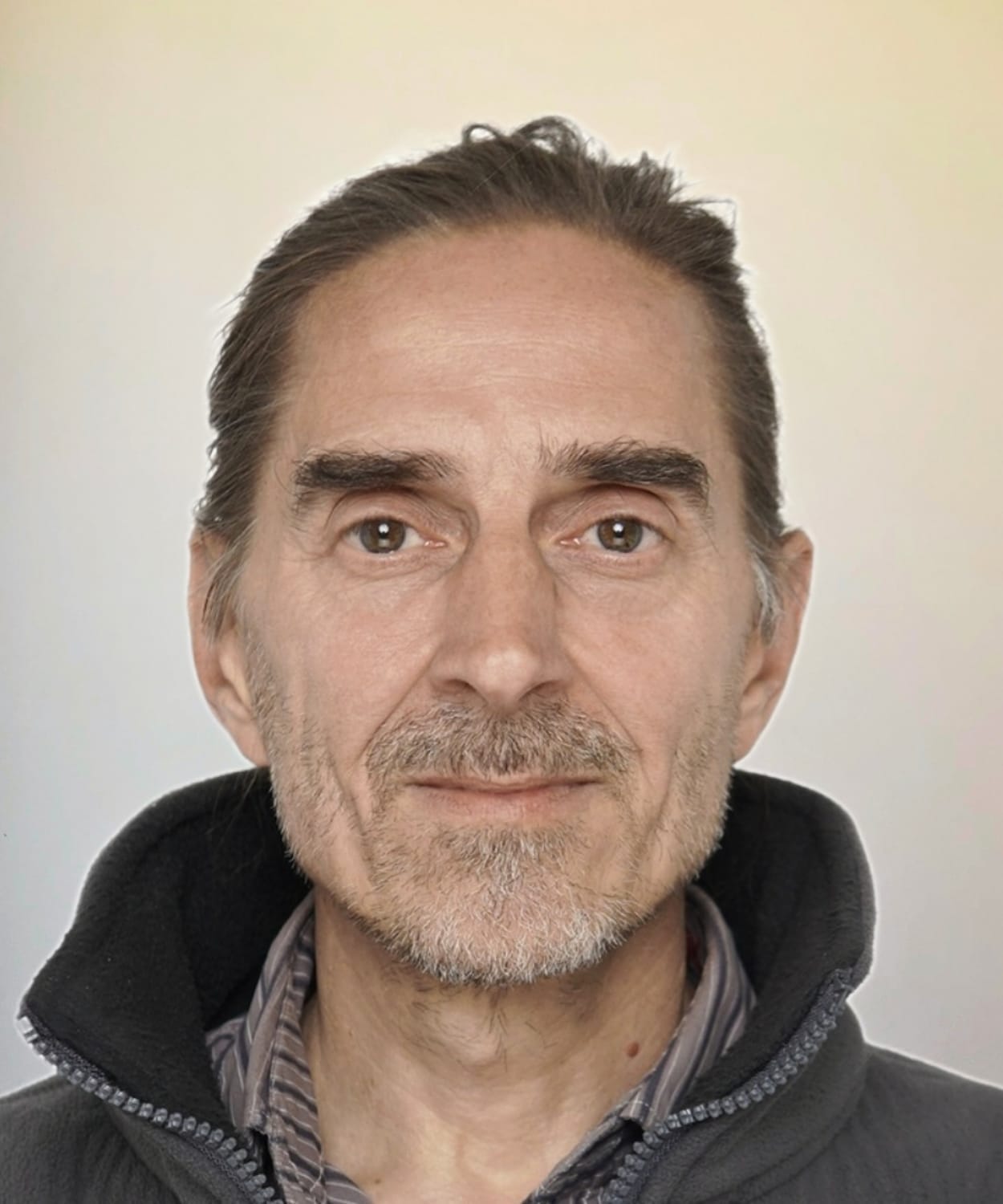
Mathias
Healers, TCM Expert, Qigong Teacher, Breathwork and LifeCoaches. In my whole life, I have been looking for the deep meaning of life and how to experience the True Self in life.
Join my Newsletter
Vital Ease
Founder Biological Performance Systems — Classical Chinese Medicine + Clinical Blood Diagnostics.



Stay Connected
The Vital Ease Edit — Weekly forensic insights on founder biological performance. Published every Saturday."
No spam. Weekly forensic insights on founder biological performance.